
**AIIMS Begins Process for Passive Euthanasia for 32-Year-Old Harish Rana**
**In Short:**
* AIIMS has started the process of passive euthanasia for Harish Rana, who has been in a vegetative state for over a decade.
* The decision comes after the Supreme Court approved the request made by Rana’s family.
**Detailed News Content:**
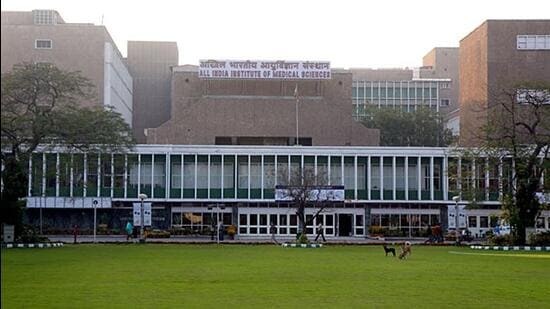
The All India Institute of Medical Sciences (AIIMS) has initiated the process of passive euthanasia for Harish Rana, a 32-year-old man who has been in a vegetative state for over a decade. The decision comes after the Supreme Court approved the request made by Rana’s family, who sought the court’s permission to discontinue life support for their son.
Rana was admitted to AIIMS in 2010 after he met with a severe road accident that left him with a traumatic brain injury. Despite medical efforts, he remained in a vegetative state, unable to communicate or respond to his surroundings. Over the years, Rana’s condition deteriorated, and his family decided to seek passive euthanasia, a process that involves the withdrawal of life-sustaining treatment, allowing the natural process of death to occur.
In 2018, the Supreme Court recognized passive euthanasia as a fundamental right under the Indian Constitution, allowing terminally ill patients to die with dignity. The court laid down guidelines for the implementation of passive euthanasia, including the need for a medical board to examine the patient and certify that they are in a vegetative state with no chance of recovery. In Rana’s case, a medical board at AIIMS examined him and concluded that he met the criteria for passive euthanasia.
Rana’s family approached the Supreme Court, seeking permission to discontinue life support for their son. The court, after hearing the arguments, granted the request, stating that the decision was in Rana’s best interest. The court also directed AIIMS to constitute a medical board to oversee the implementation of the passive euthanasia process.
The passive euthanasia process involves the gradual withdrawal of life support, allowing the patient’s body to shut down naturally. The process can take several days or even weeks, depending on the patient’s condition. In Rana’s case, the medical board at AIIMS has started the process, and his family is by his side, providing comfort and support.
Passive euthanasia remains a controversial topic in India, with some arguing that it goes against the principles of Hinduism, which values the sanctity of life. However, supporters of passive euthanasia argue that it allows terminally ill patients to die with dignity and alleviates their suffering. The Supreme Court’s recognition of passive euthanasia as a fundamental right has opened the door for more discussions and debates on the topic, with some calling for the legalization of active euthanasia, where a patient is given a lethal dose of medication to end their life.
In conclusion, AIIMS has started the process of passive euthanasia for Harish Rana, who has been in a vegetative state for over a decade. The decision comes after the Supreme Court approved the request made by Rana’s family, who sought the court’s permission to discontinue life support for their son. The case has once again highlighted the need for a broader discussion on end-of-life care and the right to die with dignity.
Source: Hindustan Times